Q & A with
Lilian Munk Rösing
28.12.2025
1.You just published the monograph Tove Ditlevsens veje. What made you think of „veje," which „veje" are meant and how does this open the work for a different path than other ways of reading? (In Television Jacques Lacan speaks of a need for "errant“ paths.)
I had very early in the process two images from each end of Tove Ditlevsen’s life: At the beginning “The Street of Childhood” – which is the title of her second novel, referring to the street in the working-class neighbourhood in Copenhagen where she grew up, and which stays a pulse in her writing. At the end the path she followed in a forest North of Copenhagen, looking for a nice spot to lay down and swallow her pills – the path to suicide, if you will. (Even if this first suicide did not succeed – she lived for two years more – between two deaths, as you might say – until the second one succeeded.)
I have literally followed in her footsteps; parts of my book are reportages from my excursions to the places where she lived. And “excursion” is also part of my essayistic method which I see as related to the method of free association. The essay has been described as a text that is like a stroll, and strolling has literally been an important part of my writing this book.
2. I would like to refer to a comment from your book on Ditlevsen’s style: “TD is Helle Helle stuffed. With detailed reporting from the subtle inner life between the sparse lines of dialogue.“ Could you say a bit more how the metaphor of the stuffed Danish writer is meant (especially since the authors you reference, while a big figure in Denmark, is not as well known in Germany)?
Oh, Helle Helle is a wonderful Danish novelist who writes in the tradition of Hemingway and Raymond Carver (though more and more like Beckett) – you know, it is up to the reader to infer from the characters’ lines and gestures what goes on in their minds. Ditlevsen’s novels and stories are not like that; they are “stuffed” with mind stuff (narrated thoughts, metaphors for mental processes and so on), but they share the same interest in subtle and sudden emotional changes in and between people. Those changes that I name “tropisms”, from Nathalie Sarraute who coined this botanical metaphor, originally meaning the unnoticeable turning of plants according to the sun.
3. In your chapter on the eggnog you write that TD, when asked by schoolchildren for the “meaning” of the eggnog, rejects that the motif should have any symbolic meaning. In line with Ditlevsen’s position you suggest that the significance is to be found not so much in the ‘signifié,’ (signfied) but rather in the ‘signifiant’ (signifier) itself: as performative utterance, as gesture, as an exchange of gifts. Why would you consider Ditlevsen as particularly interesting in this regard, as an “author [who] has shaped the language”– and, more precisely the Danish language?
What is important to me, is the fact that even if the “eggnog” (or another highlighted signifier, in Ditlevsen’s or any other writer’s work) does not have a fixed symbolic meaning, it does not mean that it does not mean anything. This is something I really learned from psychoanalysis – how the signifier can be a gesture, a gift etc. – and always must be understood in the context of the signifiers that surround it. Apart from Ditlevsen herself, I am here inspired by Georges Didi-Huberman who evokes Emil Benveniste’s distinction between “signification” and “signifiance”, the latter meaning that some “signifying” is going on which cannot be reduced to a stable, univocal signification. What I am here implicitly polemic to, is the tendency within literature and art studies to be “against interpretation”. I (with Ditlevsen) am against clumsy interpretations insisting to “translate” one isolated signifier, but I am also against readings that regard interpretation as a kind of “befoulment” of the “pure” aesthetic or phenomenological object.
4. We are also very interested to learn more about how the relationship between stylistic/literary devices and the perception of visual art seems to be a continuous theme throughout your work - as, for instance, in your reading of Charlotte Delbo, a Holocaust survivor.
Well, for many years I regarded myself as a “visual analphabet” – someone who forgot to look around me, because my mind was always like stuffed with and wrapped in words. Like living in a verbal fog. But occasionally some paintings kind of penetrated the fog and provoked very strong emotional reactions in me. And I encountered the writings of Georges Didi-Huberman and was blown away by the way he could change my view. I wanted to learn to see – sehen lernen, as Rilke has it. This made me write two books on painters – one on the Danish artist Anna Ancher, and one on Caspar David Friedrich. I realized that ekphrasis – putting images into words – is actually a basic literary operation. One simplified version of a (certain kind of) writer would be that she is someone who puts images (whether inner or outer, fantasized or witnessed) into words. Then again, when it comes to visual art as well as to literature, I will always be interested in the messages that reside in that which exceeds representation – the materiality of the signifier, if you will: the patterns of sounds and letters in literature, the texture and brush strokes in painting. My basic definition of art is that it is a kind of thinking that occurs in the giving form to a material, be it the material of verbal language, canvas and paint, or something else.
5. In the chapter “Creative Paranoia” you observe how Tove Ditlevsen turns the protagonist himself into a stylistic device: “It is a bit as if TD, with the paranoid person as medium, paints expressionistic paintings.” Tove Ditlevsen herself too. Can you say a bit more about how the relationship between aesthetics and psychic illness? If "tout le monde est fous" (as Lacan says), there are clearly some that are more fous than others.
TDs paranoid character experiences his thoughts as material, as some kind of fluid whirl inside of him. This may of cause be a horrible, anxious experience, but also close to art’s materialization of mind matter.
I tend to regard art as basically de-familiarizing; it disturbs our habitual way of perceiving – the “grid” through which we perceive the world. There are many ways to put this: It is closer to the primary processes, it lets in a bit of the real, it destabilizes the symbolic order. It opens to Dionysian dissolution, but counters it with creating new form, or, as Melanie Klein would have it: the artist has to be able to dwell in the paranoid-schizoid position to make way for that act of “reparation” which the work also is. Then, there is also a “maniac” dimension of artistic creation, this observation was Anton Ehrenzweig’s supplement to the Kleinian theory of art.
I guess that in some cases, making art is what prevents the artist from suffering from her madness. It may also not do so. Or the artist may suffer as a response to unproductiveness. This was the case for Tove Ditlevsen who fell into suicidal depressions when she could not write. In a posthumously edited poem, she speaks of her analyst, “this well-meaning person” as someone who never understood “the cruel pain of infertility”, which I take to be her pain when no poems came to her. As a child, she had the epiphanic experience of luminous garlands of words coming to her as she sat in the window facing the backyard. In this image, she is really in the position of a saint, in the feminine position – the pas-tout, if you will. When this experience is blocked to her, she falls into despair and abuse. “When no one wrote, all the pages were empty” she writes in an early poem, apostrophizing herself as doomed.
“Tout le monde est fou”… Even in this “tout” there might be the potential of a “pas-tout”, and perhaps that is the share of the artist. A kind of madness which is not devoted to the big Other, but rather to the flaw in the big Other.
6. How does this engagement with paranoia in Tove Ditlevsen relate to your interest in the child's perspective in your previous work and to the question of the value of psychoanalysis and aesthetics today?
My PhD dissertation on the child’s perspective in modernist literature (which I wrote 30 years ago) was much inspired by Walter Benjamin’s Berliner Kindheit um 1900. To him, the child is someone to whom the world (the symbolic order) is at the same time completely familiar and completely unfamiliar. On one hand, the world is the child’s natural, unquestionable dwelling; on the other hand it is a place filled with enigmatic messages that it does not get or misunderstands. Benjamin sees a great philosophical potential in the child’s misunderstanding, both for dismantling oppressive signifiers and for creating new ones.
A common denominator in all this may be my interest and belief in the defamiliarizing perspective that I find in both art and psychoanalysis. Furthermore, Benjamin as well as psychoanalysis as well as Tove Ditlevsen insist that we have an obligation towards the expectations that our past had to the future.
Lilian Munk Rösing is Associate Professor at the Department of Arts and Cultural Studies, Copenhagen University, and a literary critic. She does her research and writing in the cross field of aesthetics, psychoanalysis, and critical theory. Her most recent books are Friedrichs farver, on Caspar David Friedrich (2025), and Tove Ditlevsens veje (2025). In English, she has published one book: Pixar with Lacan. The Hysteric’s Guide to Animation (Bloomsbury 2017) and co-edited two anthologies: Literature. Introduction to Theory and Analysis (Bloomsbury 2017) and Analysing the Cultural Unconscious (Bloomsbury 2021).
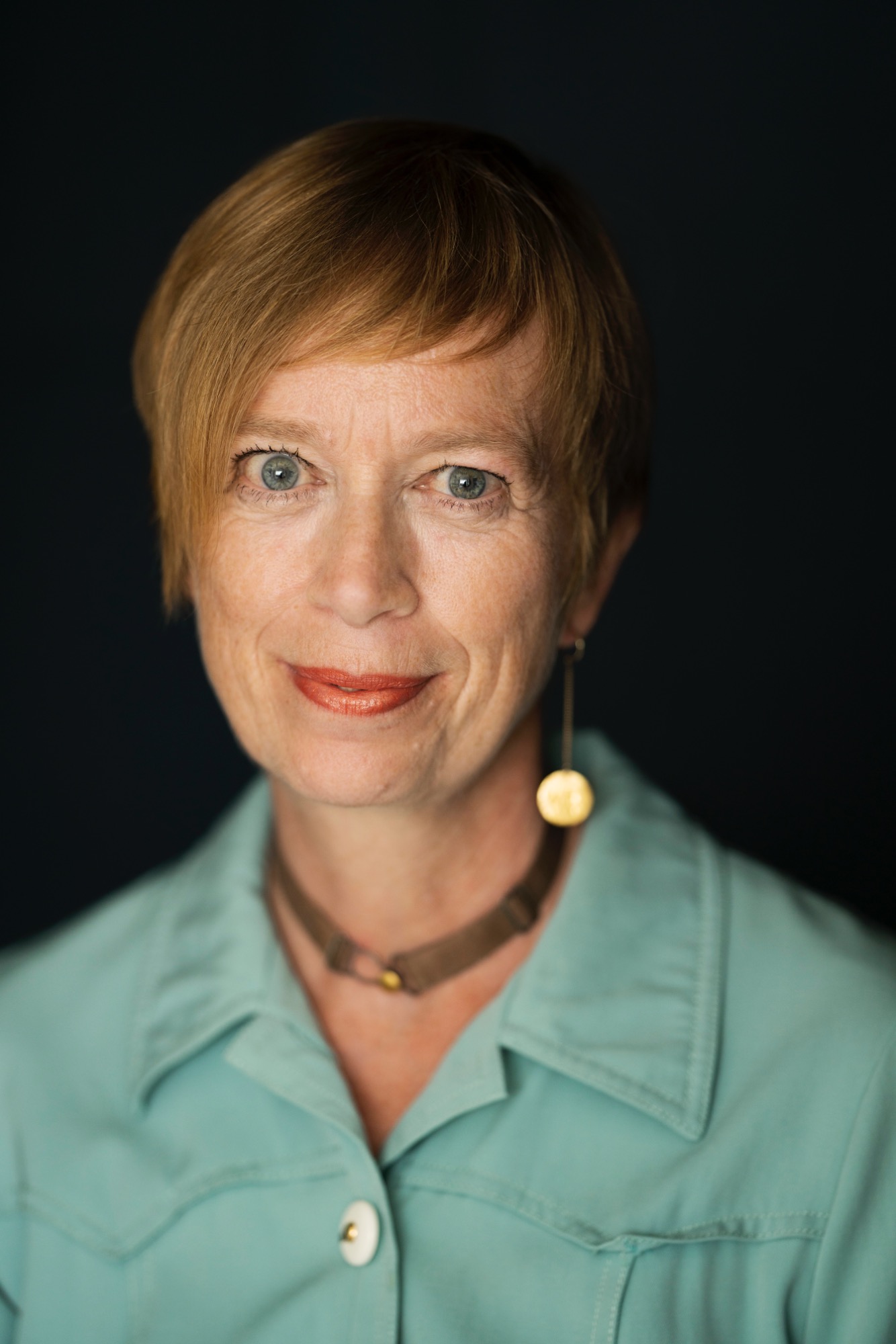
Foto:
Lærke Posselt