Essay by Agus Soewarta
Listening to Things
2.2.2026
One of the early writings of the German philosopher Walter Benjamin bears the title On Language as Such and on the Language of Man (written in 1916 but not published in Benjamin’s lifetime). Its hermetic style and metaphysical claims make reading it a difficult task. Already the title indicates the unusual character of the claims being made: the human language is only one instance of "language as such" which goes far beyond human existence. Everything without exception partakes of language. Benjamin makes this clear from the very beginning of the essay. He defines language as encompassing "all communication of the contents of the mind" ("jede Mitteilung geistiger Inhalte;" in my opinion the English phrase "contents of the mind" is slightly unfortunate since it has human connotations which is explicitly not intended and it could be replaced by the phrase 'spiritual contents'). According to Benjamin, every "event or thing in either animate or inanimate nature"[i] has a language; in other words, everything that has a material aspect also has a language; this includes cultural artefacts. Benjamin's own example is a lamp, whose linguistic being he calls "language-lamp."[ii] To complicate things further, Benjamin’s notion of 'the language of man' is not what we commonly understand by language: "It is possible to talk about a language of music and of sculpture, about a language of justice that has nothing directly to do with those in which German or English legal judgments are couched, about a language of technology that is not the specialized language of technicians. Language in such contexts means the tendency inherent in the subjects concerned – technology, art, justice, or religion – toward the communication of the contents of the mind."[iii] Again, "the tendency […] toward the communication of the contents of the mind" is a translation of "das auf Mitteilung geistiger Inhalte gerichtete Prinzip."
This sounds like an esoteric theory of language and to a certain extent it is. However, as I shall try to show, the stakes are quite high. Benjamin’s theory of language is no less than an attempt to determine all human thinking and action as conditioned by and trapped in instrumentality, i.e. the inescapable attitude of human beings toward each other as well as toward non-human and inanimate beings as instrumentalized objects of control and not as beings in their own right. This instrumentality carries the seed of exploitation, oppression, violence – and ultimately the catastrophe which he saw coming in the final years of his life and which culminated in the Second World War. The fact that this dystopic determination includes man’s relation to nature makes it especially relevant regarding today’s ongoing environmental disaster. But Benjamin’s admittedly pessimistic point of departure is not simply an expression of a defeatist resignationism. His theory of language implies a moral imperative to counteract the all but total domination of instrumental thinking and practice. In Benjamin’s view, human language as we know it is the very principle and medium of the instrumentality in which man is imprisoned. However, this human language is a distortion of an original God-given language in which the true nature of everything can be expressed. It is this original language Benjamin refers to when he defines language as the principle of communication of spiritual contents. Even though ordinary human language testifies to the loss of true language, the moral obligation of man is to listen to things, natural as well as artificial, in an attempt to hear their silent speech and to listen to the ordinary human language in an attempt to hear the echo of the lost original language. In other words, Benjamin’s theory of language is also an ethics of listening. The ultimate perspective of such a listening would be the redemption of man (and the world), otherwise caught in a logic of violence and destruction. Interestingly, Benjamin’s theory of language is explicitly anthropocentric, but his anthropocentrism is fundamentally different from what we today understand by anthropocentrism which in a Benjaminian perspective would be an aspect of ordinary human language and not compatible with true language. In the following, I shall try to give an account of Benjamin’s language essay (as it is sometimes nicknamed) and its perspectives and finish with an example of Benjamin’s own listening, taken from his autobiographical Berlin Childhood around 1900.
Benjamin's unfolds his language theory and listening ethics as a unity of theory and practice. Benjamin formulates his theory by listening to a particular linguistic object. His theory is thus an instance of the ethics that it entails.
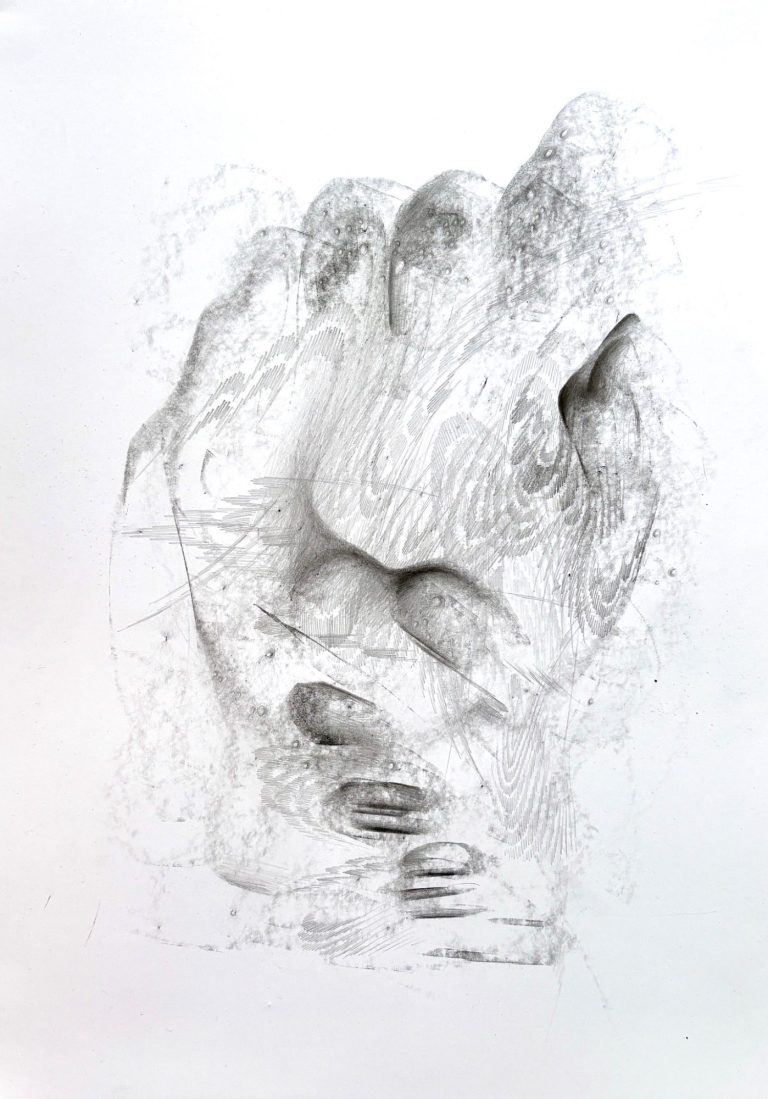
Patricia Detmering, January 2026
Benjamin presents a reading of the biblical account of creation and the fall of man. There are two unspoken but compelling reasons for choosing the Bible. Firstly, Genesis 1-3 is one of the foundational documents of the legitimation of the anthropocentric domination of nature: God places man as master of nature (Gen 1:28). By putting the human intentions of the text in the background Benjamin wants to ‘listen forth’ an alternative narrative; he wants to listen to the hidden speech of the text itself. Secondly, the biblical is the only mythical creation story that assigns such a crucial role to language (at least to my knowledge).
Benjamin conjures up an alternative narrative of Genesis 1-3 by paying attention to the form of the text, and by breaking the text into smaller pieces that he - as a kind of anticipation of his later interest in montage techniques - puts together in a new way. He breaks up and reassembles the text according to a certain principle that he directs his listening towards. This principle is the theoretical principle of language. In other words, Benjamin reorganises the biblical text by viewing it from the perspective of language theory (which is prompted by the text's own language motif). In this way, the language-theoretical perspective governs what one might anachronistically call his 'cut-up technique.'
I Genesis 1, God’s word is creative. Benjamin notes that God's creative act in Genesis 1 is associated with a three-part basic rhythm (of which one or two parts are sometimes omitted): "let there be - He made (created) - He named,"[iv] for example: "and God said, Let there be a firmament in the midst of the waters: and let it diuide the waters from the waters. And God made the firmament; and diuided the waters, which were vnder the firmament, from the waters, which were aboue the firmament: and it was so. And God called the firmament, Heauen: and the euening and the morning were the second day." (Gen 1:6-8) The first and last parts of each act of creation are thus explicitly linguistic. In the first part, God utters the creative word and in the last part, the name that determines the nature of what is created.
But when God creates man, Benjamin points out, this basic rhythm gives way to another. Genesis 1:27 states: "so God created man in his owne Image, in the Image of God created hee him; male and female created hee them." Benjamin writes: "in the creation of man, the threefold rhythm of the creation of nature has given way to an entirely different order. In it, therefore, language has a different meaning: the trinity of the act is here preserved, but in this very parallelism the divergence is all the more striking, in the threefold 'He created' of 1:27. God did not create man from the word, and he did not name him."[v]
Benjamin juxtaposes this with two ‘cut-outs’ from the alternative creation account in Genesis 2. The first reads: "And the LORD God formed man of the dust of the ground, & breathed into his nostrils the breath of life; and man became a liuing soule." (Gen 2:7) In Genesis 2, language plays no role in God's creative act, but on the other hand, it is made explicit that man is created from a material and not from God's word. The second ‘cut-out’ reads: "and out of þe ground the LORD God formed euery beast of the field, and euery foule of the aire, and brought them vnto Adam, to see what he would call them: and whatsoeuer Adam called euery liuing creature, that was the name thereof.” (Gen 2, 19) The configuration of Genesis 1 and the two 'cut-outs' from Genesis 2 form a new text from which Benjamin can 'elicit' a theory of language: "the second version of the story of the Creation, which tells of the breathing of God's breath into man, also reports that man was made from earth. This is, in the whole story of the Creation, the only reference to the material in which the Creator expresses his will, which is doubtless otherwise thought of as creation without mediation. In this second story of the Creation, the making of man did not take place through the word: God spoke - and there was. But this man, who is not created from the word, is now invested with the gift of language and is elevated above nature."[vi]
In the narrative of the new textual configuration, each creature is produced by a word of God, which is also the essence of each creature. Because God, as the only exception, creates man out of the dust of the ground and then - as reported in Genesis 2:19 - lets man give each animal a name, just as God himself names his creatures in Genesis 1, this means for Benjamin that man's language is God's own language, which God has given to man. However, man is given God's language in a slightly truncated version. While God's language is both creative and naming (as documented in the three-part rhythm of the act of creation), the language given to man is only naming, but still divine: a divine name language or naming language. Importantly, Benjamin also makes a connection between name, cognizance and the good. A creature's name is its essence, and therefore the name is also the immediate cognizance of this essence; furthermore, when some of the verses in the first creation account state that 'God saw' that what was created was good, it means that by naming his good creation God has also cognized it. Cognizance is thus cognizance of the good creation: "Language is therefore both creative [das Schaffende] and the finished creation [das Vollendende]; it is word and name. In God, name is creative because it is word, and God's word is cognizant [erkennend] because it is name. "And he saw that it was good"[vii] – that is, he had cognized [erkannt] it through name.
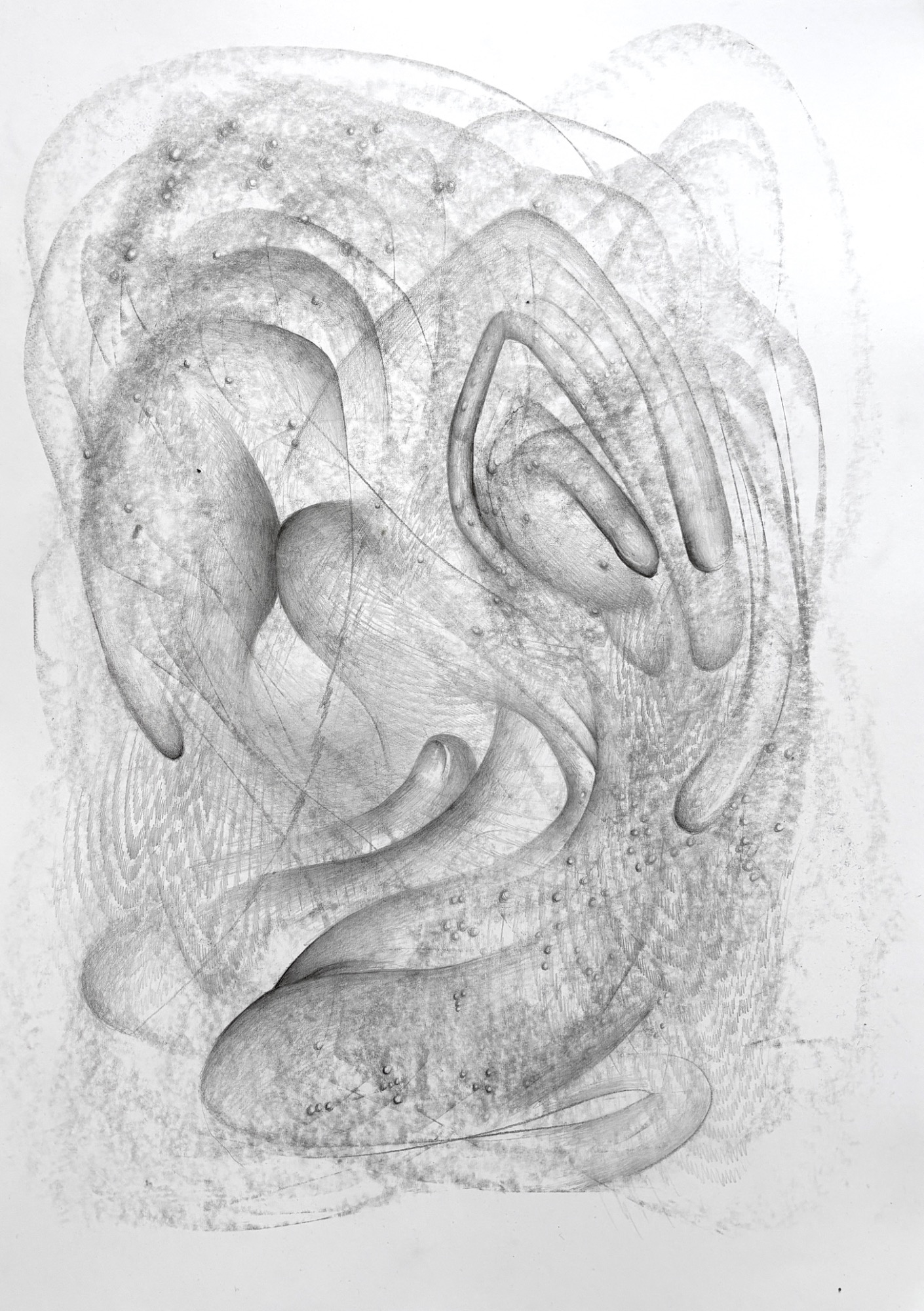
Patricia Detmering, January 2026
Unlike the rest of creation, man's essence is not a creative word spoken by God. Instead, man's essence is the naming language given to him by God, and man realises his essence by naming things. Man is the namer; by this we recognise [erkennen] that through him pure language speaks. All nature, insofar as it communicates itself, communicates itself in language, and so finally in man. Hence, he is the lord of nature and can give names to things.[viii]
This seems to be the language-theoretical reproduction of the universal anthropocentrism of the creation story. But here is precisely the point where the semantic-denotative narrative of the creation account is turned on its head. The fact that, according to the biblical text, God himself names his creatures and then leaves it to man to name them makes it possible to assume a difference between the divine and the human act of naming. God's naming is the manifest cognizance of the creative word as the essence of the creature. It is different with human cognizance: "this knowledge of the thing, however, is not spontaneous creation; it does not emerge from language in the absolutely unlimited and infinite manner of creation. Rather, the name that man gives to language depends on how language is communicated to him. In name, the word of God has not remained creative; it has become in one part receptive, even if receptive to language. Thus fertilized, it aims to give birth to the language of things themselves, from which in turn, soundlessly, in the mute magic of nature, the word of God shines forth."[ix]
Since man’s name language is "in one part receptive," the nature and task of man is to listen to things in order to give them a name in accordance with their nature. The language of things is a silent language, and man's task is, through naming, to give things an aural language in which the cognizance of their essence becomes manifest. In other words: Benjamin's anthropocentrism is that man, by virtue of his language-privileged nature, must serve things by listening to them and redeeming them by giving them a name, and not that man can dictatorially subjugate things and utilise them for his own purposes. Benjamin even suggests in passing that man's task is to remedy a certain imperfection, recognised by God himself, in God's otherwise good creation: "The life of man in the pure spirit of language was blissful. Nature, however, is mute. True, it can be clearly felt in the second chapter of Genesis how this muteness, named by man, itself became bliss, only of lower degree."[x]
There is one last important element in Benjamin's theory of listening. It is about how man stopped listening and started talking instead. He does this by incorporating the story of the fall of man into the perspective of language theory. The fall of man now becomes a linguistic event. It consists in man’s loss of his name language and in the origin of human language. The name is the cognizance of creation, and God has seen, i.e. cognized, that all creation is good. Eating from the tree of the knowledge of good and evil means gaining a cognizance that is nameless, as evil does not exist. Instead of the name, which is itself part of the essence of the thing named, man gets the human word, i.e. the arbitrary sign that does not express the essence of the thing named but merely designates things in accordance with a social convention; there is no longer any essential connection between the linguistic expression (commonly known as the signifier) on the one hand and its meaning (commonly known as the signified) and its referent on the other, for example between the aural expression 'stone' on the one hand and the meaning of 'stone' and stone as a physical-material object (the terms signifier, signified and referent as they are used here was coined by the Swiss linguist Ferdinand de Saussure who also introduced the notion of the arbitrariness of the sign in modern linguistics).
"The apples [of the Tree of Knowledge] were supposed to impart knowledge of good and evil. But on the seventh day, God had already cognised with the words of creation. And God saw that it was good. The knowledge to which the snake seduces, that of good and evil, is nameless. It is vain [nichtig] in the deepest sense, and this very knowledge is itself the only evil known to the paradisiacal state. Knowledge of good and evil abandons name; it is a knowledge from outside, the uncreated imitation of the creative word. Name steps outside itself in this knowledge: the Fall marks the birth of the human word [...] The word must communicate something (other than itself) [...] In stepping outside the purer language of name, man makes language a means (that is, a knowledge inappropriate to him), and therefore also, in one part at any rate, a mere sign [...]."[xi]
What is Benjamin saying here? What does it mean that the knowledge of good and evil is nameless and vain (or "nichtig" in German, i.e. to be regarded as nothing) and that it is "a knowledge from outside, the uncreated imitation of the creative word"? As Benjamin points out, there is no evil in God’s good creation but then how can man gain knowledge of it? Perhaps it could be useful to try to rephrase Benjamin’s insight. Some biblical scholars have argued that the phrase "good and evil" is a merism, i.e. a rhetorical device in which two contrasting parts signifies a whole. If we take this to be true (without making any philological claims regarding the Bible), “knowledge of good and evil” simply means knowledge of the creation. The "of" in "knowledge of" implies a split between the one who knows and that which is known, in other words, the classic epistemological split between a knowing subject and a known object. In this perspective, Benjamin’s account of the adamitic name language and the fall of man as the origin of the arbitrary sign could be read as a metaphysical epistemology. Originally, man is an integrated part of creation. As God’s creation, man is in God’s creation without any remainder. Man is a being in the fullest sense of the word. But the "knowledge of good and evil" – in our interpretation simply the knowledge of creation – is a knowledge that involves a gap between God’s creation as the object of knowledge and man as the subject of this knowledge. This means that man is no longer fully in God’s creation (which now turns into the world as we know it) but at the same time also outside of it; in Benjamin’s words, man’s knowledge is "a knowledge from outside." Benjamin’s "evil" could be interpreted simply as this gap between the knower and the known. The "knowledge from outside" is the nothingness of this very gap and it creates a hole in being, in man’s as well as in nature’s being. The arbitrary sign with its gap between signifier and signified is this hole and human cognizance is now condemned to standing outside of that which it cognizes. When man is no wholly in God’s creation but also partly outside it, human cognizance becomes purely instrumental. It can never cognize the true nature of its objects but only relate to them as objects of control. Man is no longer the lord of nature but the dictator of nature, exploiting nature as a resource.
In Paradise, nature was mute but it had a mute language with which it could communicate itself mutely to man who could remedy this muteness by naming it. Now, nature’s mute communication has been cut off since man’s post-adamitic language, the language of the arbitrary sign, cannot ‘tune in on’ nature’s mute language. Thus begins nature's other muteness: "Now begins [nature's] other muteness, which is what we mean by the 'deep sadness of nature.'"[xii] Nature mourns the mute suffering of man's instrumental exploitation, of the kind of mastery of nature that values nature only as a resource for human activity, and which we usually associate with the concept of anthropocentrism.
This kind of mastery of nature starts with and is conditioned by the human word, i.e. the arbitrary sign. The arbitrary sign is an instrumental sign. It disregards the peculiarity of the thing and its intrinsic value and instead functions as a categorisation system that enables human exploitation of things. The suffering of nature, however, does not exclude man, on the contrary, as a biological creature man is also a part of nature. The human cognizance of itself as human being is also necessarily conditioned by the instrumentality of the arbitrary sign. The linguistic fall of man is not only the origin of the control of nature but also of social control which regards human beings as manipulable objects, as anonymous specimens. Implicitly at least, it paves the way for social oppression, violence – and ultimately to the extermination camps, to avoid which Benjamin committed suicide in 1940.
Not only nature suffers, language itself suffers too: "The word must communicate something (other than itself)," as the above quote states. Language suffers by having to serve a purpose that is alien to itself. The suffering word is the material signifier which is forced to carry an arbitrary meaning that is foreign to its own nature. However, the materiality of language itself is rooted in the language of names: "Name, however, with regard to existing language, offers only the ground in which its concrete elements are rooted."[xiii] Perhaps it is possible to understand Benjamins point as follows: the material signifier itself is not identical with the adamitic name language; however, name language stands in a non-arbitrary relationship to the material signifier. In this way, a reminiscence of the name language survives in the signifier and thus in the otherwise instrumentalized and instrumentalizing human language.
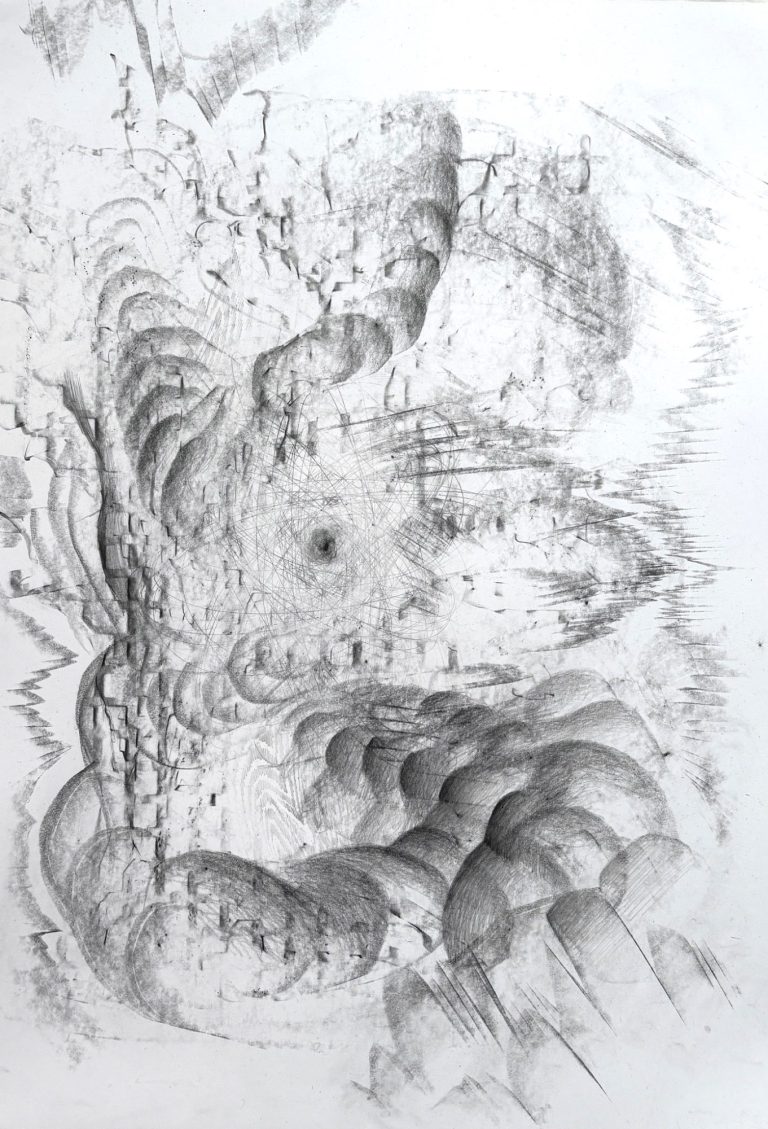
Patricia Detmering, January 2026
Listening for the echo of the name language in the signifier and listening for silent speech of things becomes a moral imperative in order to counteract the instrumentality of human cognizance and human practice. But is this at all possible? How do we listen for the true language which Benjamin attempts to conceptualize?
These questions are not easy to answer but I would like to mention one direction that might lead to an answer. I think that Benjamin’s way of listening starts with a kind of circumvention of the human intentionality involved in linguistic and cultural artefacts as well as in (inevitably implied human interaction with) natural objects. As we have seen with his reading of Genesis, Benjamin uses a kind of 'cut-up technique' in order to produce a biblical narrative that circumvents the straightforward intention of the story of creation and the Fall. As I see it, this strategy prefigures Benjamin's theory of constellations which he explains in the preface to The Origin of German Tragic Drama (1928). Thinking in and creating constellations means to forcefully rip out elements of a phenomenon (or different phenomena) and assembling them in a way that gives this phenomenon (or these phenomena) a meaning other than the one that is commonly attributed to it/them and that is erroneously taken to be the natural one.
Perhaps a tiny example of another one of Benjamin’s 'listening experiences' would be in its place. In his autobiographical Berlin Childhood around 1900 (final version written 1938 but not published in its entirety in Benjamin’s lifetime) Benjamin captures moments of his childhood, arranged in small, headlined sections. In one of the sections, "The Otter," Benjamin recalls his encounters with the otter in Berlin’s Zoological Garden. He combines three motifs: the deserted place, the otter and the rain. The otter is placed in the periphery of the garden. The nearest entry gate is the least used and it leads "into the most neglected part of the garden"[xiv]. The visitor entering through this gate must walk down an avenue which resembles "an abandoned promenade." But precisely because of its ruinous character, the neglected part of the Zoological Garden also becomes "a prophetic corner." Benjamin tells us that certain places – especially abandoned ones – can make you gain insight into the future: "In such places, it seems as if all that lies in store for us has become the past." So urban places that are still functioning in the present but are already in a state of decay is like a look into the future – a premonition of the ruinous state that is to come inevitably.
This prophetic dimension gains special importance in connection with the otter. Zoological Gardens (at least in the beginning of the 20th century) could arguably be perceived as paradigmatic examples of the anthropocentric use and control of nature. Benjamin’s description of the otter’s cage is certainly in accordance with such a view: The otter’s cage is described as a prison cell: "And a cage it was, for strong iron bars rimmed the basin in which the animal lived."[xv] A construction of grottoes is intended as a shelter for the otter but significantly, the otter seems to refuse to comply with the human intentions of the construction – it is never seen in it. Most of the time the otter is underwater and in the phantasy of the young Benjamin, the otter’s underwater world is a mysterious place of "black and impenetrable depths," a "wet night," which contrasts the incarceration description of the cage. The otter is then (through the water motif) associated with rain. It is "the sacred animal of the rainwater." and it has a "close affinity with the rain." The young Benjamin loves rainy days and loves looking for the otter in the rain. When at home on such rainy days, the rain (and, by way of its association with the rain, also the otter) speaks to him: "In a good rain, I was securely hidden away. And it would whisper to me of my future [Und meine Zukunft rauschte es mir zu], as one sings a lullaby beside the cradle. How well I understood that it nurtures growth. In such hours passed behind the gray-gloomed window, I was at home with the otter."
A few points regarding the above quote should be noted.
1) In German the verb ‘rauschen’ means something like to generate a roaring sound like that of rain, waves or waterfalls, so the sound of the rain is a secret language to which the young Benjamin listens. But the verb also contains the noun 'Rausch' which means intoxication. When listening to the rain that ‘rauschen’ to him, his consciousness may be in a slightly altered state.
2) He is "at home with the otter" ("bei dem Fischotter zu Hause") which can mean that in spirit he is at the otter's dwelling place thus creating a parallel between the otter’s cage and the boy’s bourgeois home, both being places of imprisonment on the on hand and safety, perhaps even freedom on the other (at least there seems to be an affinity between the gray-gloomed ("trüben") window behind which the boy dreams himself away and the otter's mysterious dark waters). It can also mean that he feels at home, that he can be himself when he is with the otter. There seems to be an aspect of listening to non-human beings that has to do with becoming like them, i.e. to have a mimetic attitude toward them – in fact, Childhood in Berlin around 1900 is full of mimetic occurrences, e.g. in the section “Butterfly Hunt”[xvi] where he becomes the butterfly he chases.
3) Given the blurred dividing line between listener and speaker in the mimetic act of listening, it is not only the boy's future of which the rain speaks. Also, the theme of the future connects the rain's speech to the aforementioned prophetic quality of abandoned urban places. Being a neglected and decaying place, the area itself that houses the otter speaks prophetically about the future ruin that the zoo will one day become – and not only the zoo. As the above-mentioned paradigmatic example of man's control of nature and self-interested attitude towards it, the zoo's future ruin is also the catastrophic downfall of human civilization itself. The boy and the otter/rain, man and nature share the same destiny. The cage of the animal and the dwelling-place of man are both confinements expressing a destructive violence that will ultimately lead to disaster for both. The prophecy of the abandoned place and the future of which the rain speaks are the same.
4) But the coming catastrophe is enveloped in the redemptive act of the prophetic speech itself. There are two aspects of redemption. First, when listening to the prophetic speech of the abandoned place, "it seems as if all that lies in store for us has become the past" (as quoted above). Here, the act of listening transports the listener to a future viewpoint which lies beyond the desire and struggle, the violence and suffering, of all that lies ahead of her or him. In the terminology of Benjamin's language essay, this viewpoint is outside the fallen world that is cursed by the human language of the arbitrary sign. Since the language of the arbitrary sign is itself outside God’s good creation, the viewpoint that lies beyond everything that happens in life is the negation of the Fall’s negation of God’s good creation. It is a new hole in the hole of being.
Secondly, the language of the rain (and by extension the otter) is not the language of the arbitrary sign. The message that the young Benjamin hears by listening to the sound of the rain cannot be separated from this sound (and therefore my lame attempt to translate it is hopelessly inadequate but hopefully it can inadequately point to a way of listening to Benjamin’s own text). In fact, the message is this sound and yet it is more: it is the spiritual content of the sound itself from which it is inseparable. The mimetic attitude towards the otter also transcends the logic of the arbitrary sign. The word mimetic should here be taken in its strongest sense. The young Benjamin does not imitate the otter. Instead, he becomes like the otter by being in contact with the essence or – more correctly – with the adamitic name of the otter. In the slightly rephrased words of the Marilyn Monroe song, he has got the otter under his skin. 5) Unfortunately, true listening has no practical consequences. It cannot be operationalized into an enlightened social program of true humaneness. The otter remains a captive of the zoo and an object of human entertainment. The boy remains trapped within the bourgeois culture of his parents. The practical world of human affairs goes on without ever having to know about, let alone take account of true listening. And yet there is freedom involved in listening. It is the freedom offered by a spiritual "place" in which listening beyond the logic of the arbitrary sign is possible within the world dominated by that very same logic. The psychological manifestation of this freedom is the boy’s fantasy of the dark and impenetrable depths of the otter’s underwater world, a fantasy that is also activated at home by the sight and sound of the rain beating against the window. A child’s fantasy can be more truthful than practical reality.
Notes
[i] Walter Benjamin [1916]: On Language as Such and on the Language of Man. Selected Writings 1: 1913-1926. Ed. by Marcus Bullock and Michael W. Jennings. Cambridge, Massachusetts: The Belknap Press of Harvard University Press, 2004, 62.
[ii] (Benjamin [1916], 63).
[iii] (Benjamin [1916]. 62)
[iv] (Benjamin [1916], 68),
[v] (Benjamin [1916], 68)
[vi] (Benjamin [1916], 67-68).
[vii] (Benjamin [1916], 68)
[viii] (Benjamin [1916], 65)
[ix][ix] (Benjamin [1916], 69; my italicization)
[x] (Benjamin [1916], 72)
[xi] (Benjamin [1916], 72)
[xii] (Benjamin [1916], 72).
[xiii] (Benjamin [1916], 72).
[xiv] (Benjamin [1938], 365).
[xv] (Benjamin [1938], 366).
[xvi] (Benjamin [1938], 350-351)
Bible quotations from the King James Bible 1611.
Agus Soewarta teaches comparative literature at the Department of Arts and Cultural Studies, University of Copenhagen. He has taught literary theory for a number of years and has occasionally taught courses on subjects such as Walter Benjamin’s theory of language magic, German Romanticism, and parts of Thomas Mann’s oeuvre. The subject of his PhD dissertation was the notion of critical thinking in the works of German philosopher Theodor Adorno and Swiss theologian Karl Barth. Overall, he is mainly interested lies in theoretical and artistic ideas of and searches for insights that are difficult to verbalize and in the ‘precarious’ existence of such ideas in institutions of research and education.
Patricia Detmering is a media artist from Berlin. She has given lectures in renowned galleries, foundations, and universities, such as the University of Bochum and the Krupp Foundation in Essen. Her work has received multiple awards and has been exhibited at the Centre Pompidou in Paris, the Berliner Festspiele, the Kunstmuseum Bochum and other international venues. In addition, she has received numerous scholarships. For more visit www.patriciadetmering.com.