Essay by René Rasmussen
Identity and Identification
27.2.2026
Identity and identification have become increasingly prominent topics over the past decades. This is evident not only in the feminist movement, which has emphasized that differences between the two sexes (woman/man) are based on specific relations of domination that manifest themselves in the oppression of women. It is also evident in the intense problematization of traditional conceptions of gender (man/woman or heterosexuality versus homosexuality) that has characterized these decades, finding significant expression in trans groups or, more broadly, in the queer movement.
An important theoretical source for this problematization is the American philosopher and feminist Judith Butler, who argues that gender is not grounded in biology but is instead produced by dominant norms that are assigned to each gender in a performative manner through specific speech acts. Speech acts both say and do what they say. When such a speech act names a newborn as a boy or a girl (saying that this is a boy or a girl), the individual becomes a boy or a girl within a heterosexual context. Such performative acts are grounded in the suppression of identities that do not fit within them, which, for Butler, includes women, transsexuals, and homosexuals. According to Butler, however, it is possible to alter such oppressive performative acts through new performative acts, since the oppression or the fundamental norms underlying it are not complete or all-dominating.
Butler’s theoretical contribution constitutes an important background for the problematization of previously prevailing identities, as well as for questioning the norms and speech acts that form the basis of such identities, or the identifications tied to them. Moreover, Butler’s idea is that if the necessary performative changes and breaks with dominant and oppressive norms can be carried out, it will be possible to live a self-determined life. It becomes possible to live a livable life based on the individual’s ability to name themselves in accordance with what they believe to be their correct identity.
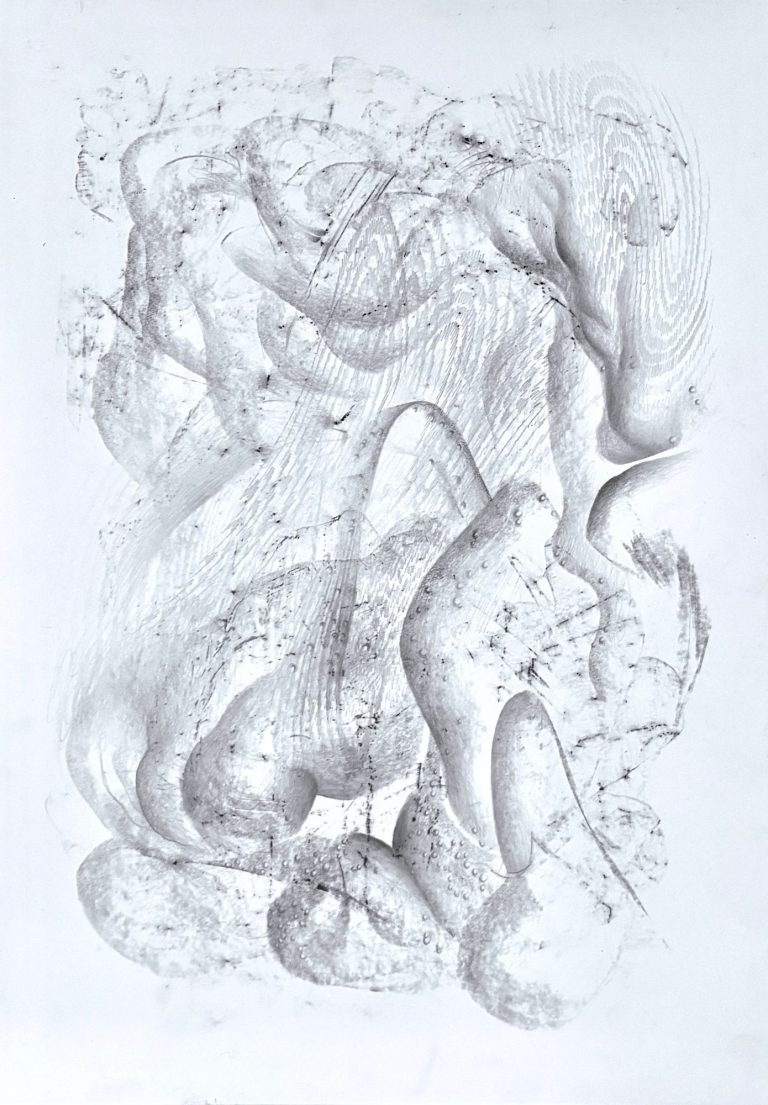
Patricia Detmering, February 2026
An implicit assumption here is that dominant norms and the laws associated with them—constituting a particular evil insofar as they prevent the individual from living a livable life—can cease to dominate. When such norms and the laws connected to them are removed or abolished, it will be possible to find one’s true identity. In this respect, Butler immediately differs from a hermeneutic tradition, in which identity—for example in the work of the psychologist and hermeneutic thinker Svend Brinkmann—concerns a self-relation or self-interpretation that does not involve such oppressive or performative norms. Although crises may arise within such an identity, there exists an integrity that includes “being the same across time and contexts.”[i] The self-relation associated with this constitutes a person’s self-interpretation of their personal biography.[ii] More precisely, it involves a self that relates to itself. It is a reflexive relationship between a self that relates to itself and the self that is reflected upon. This also involves the ability to relate to oneself through other people’s reactions and perspectives, which underscores that communication is central to self-consciousness,[iii] as are narrative connections. “The narrative structure of existence is what gives life and identity coherence.”[iv]
This hermeneutic understanding differs in many ways from Butler’s conception, but to some extent they share the same goal. Where a hermeneutic understanding operates with meaning and narrative coherence in life, Butler operates with self-determination in her understanding of gender. “[G]ender is also what is made along the way – we can take over the power of assignment, make it into self-assignment, which can include sex reassignment at a legal and medical level.”[v]In both cases, however, what is at stake is a liberation from dominant discourses and a self-grounded self-understanding or self-determination.
Where hermeneutics in Brinkmann’s version also speaks of life’s meaning and coherence, Butler speaks of a livable life. “When we ask what makes a life livable, we are asking about certain normative conditions that must be fulfilled for life to become life.”[vi] What defines a life that can be lived (in a livable way) is its opposition to “unlivable conditions of poverty, incarceration, or destitution or social and sexual violence, including homophobic, transphobic, racist violence, and violence against women.”[vii] Such self-determination involves not only the cessation of poverty and the like, but also that everyone is more or less transparent to themselves, as long as the social Other (through norms, speech acts, laws) does not suppress or reject the individual. The individual is undivided (in-divid) when the social Other does not determine them. Therefore, what matters for this individual is being what they feel they are. As the philosopher Mikkel Thorup – who draws heavily on Butler’s ideas – writes, identity politics “in its many forms arises when one experiences that there is no room to be who one feels one is.”[viii] This also applies to men, “because there is increasingly no single dominant model of masculinity to follow.”[ix] In line with Butler’s inspiration, Thorup therefore operates with the idea of “our self-relation, the ongoing inner dialogue we have with ourselves about ourselves”[x] – a self-relation that enables one to feel at ease in one’s body, one’s gender, and to be at home in the world when the inside (the self) and the outside (others) are in agreement.
The prerequisite for such agreement, however, is that language – whether on the inside (of the self) or the outside (of others) – corresponds to what is described, named, or evoked in it. The word (the signifier) must correspond to what it describes, etc., and not only that: it must also be identical with itself. The problem, however, is that no signifier is identical with itself, but is always determined by its differences from other signifiers, just as any identity tied to a signifier can only be affirmed through its difference from other signifiers, which are likewise not identical with themselves.
There is therefore no guarantee of linguistic self-identity in language. This does not exclude that certain words in specific discourses may appear as such, but then it is not the individual signifiers but a given discourse that determines such “self-identity.” The linguistic alienation inherent in the signifier’s lack of self-identity excludes transparent self-identity. As the psychoanalyst Jacques Lacan states: “The signifier as such refers to nothing if not to a discourse, in other words, a mode of functioning or a utilization of language qua link [lien].”[xi] Despite Butler’s and Thorup’s view that identity is normally (in a normative sense) determined by oppressive conditions and discourses, they assume the possibility of transparent relations that can secure the individual’s identity and allow them to live a life that is a (livable) life. Linguistic alienation plays no role. When such relations are established, gender identity “also provides a sense of where and how one fits into the world—or does not.”[xii]
In accordance with such thinking, women are “in many places freer than ever before to become and be the kind of woman the individual wishes to be.”[xiii] In Thorup’s account, the signifier woman is detached from given discourses that, for example, define a woman as non-man, and is turned into a unique designation that the individual can adapt to themselves. This adaptation presupposes that language is ideally transparent and fully surveyable. It constitutes a world meant to encompass all linguistic material. This understanding presupposes not only that language is transparent but also that there is nothing that cannot be said within it. Sexual or other forms of enjoyment must therefore also be linguistically crystal-clear. The proof for such clarity, however, lies in language itself, which would thus have to contain an inherent guarantee of correspondence between language and enjoyment, or signifier and body. Such a guarantee, however, does not exist outside given discourses, and it cannot abolish the individual’s determination by those discourses.
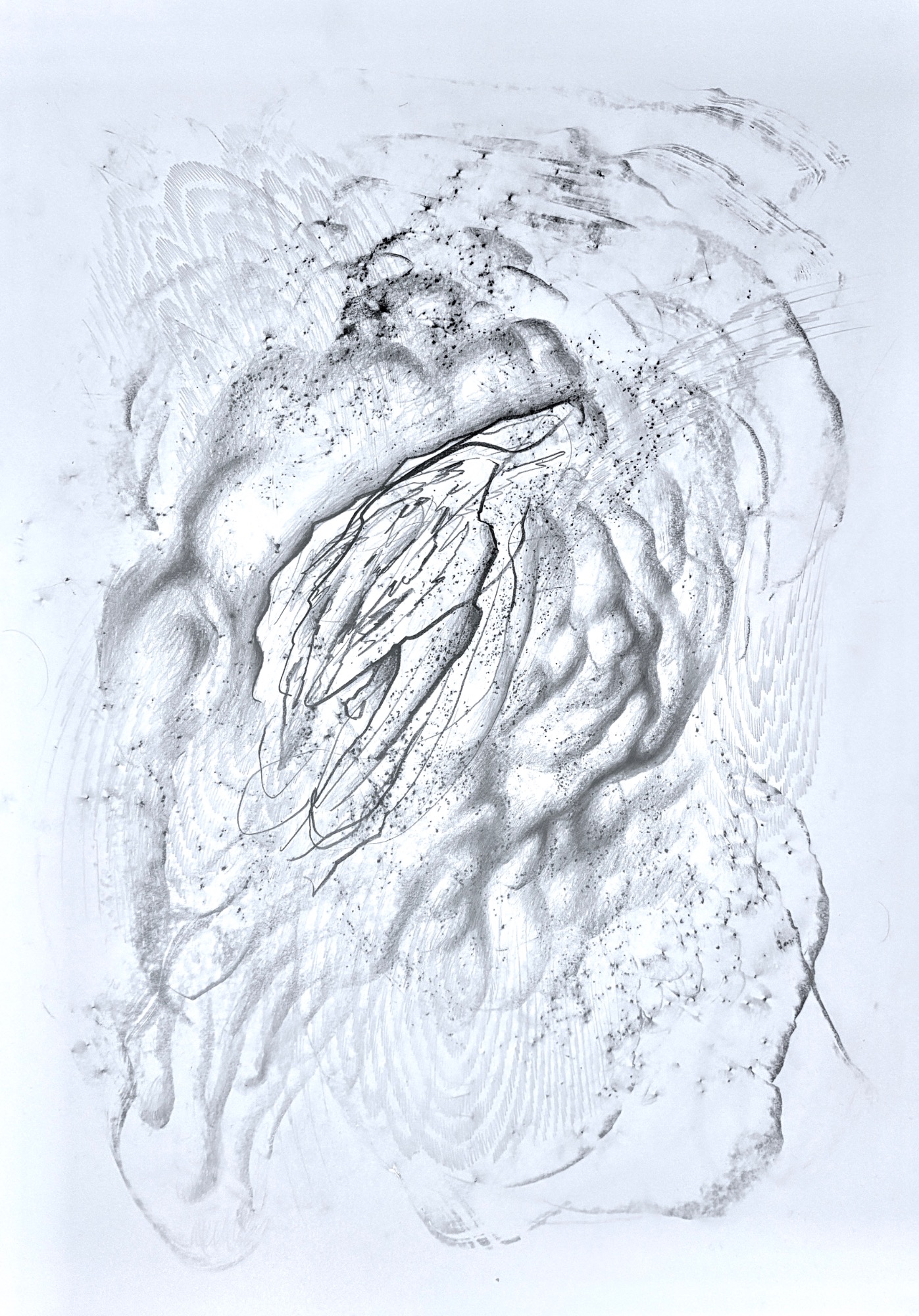
Patricia Detmering, February 2026
A similar dead end emerges when Butler and Thorup speak of being what one feels one is. Such an idea presupposes a correspondence between being and feeling. But what secures such a correspondence? It can be neither being in itself nor feeling in itself that guarantees harmony, but both in a particular union. The prerequisite for their harmony is moreover guaranteed by themselves. We are thus returned to the self-determination emphasized by Butler. This is a self-authorizing act that fundamentally does not involve the Other or the discourse that connects the individual to the Other, since involving the Other would entail a linguistic coherence and a guarantee of such coherence that includes a given discourse extending beyond the individual. The self-authorizing act must therefore exist outside such a linguistic context. The self-authorizing individual stands outside such a context.
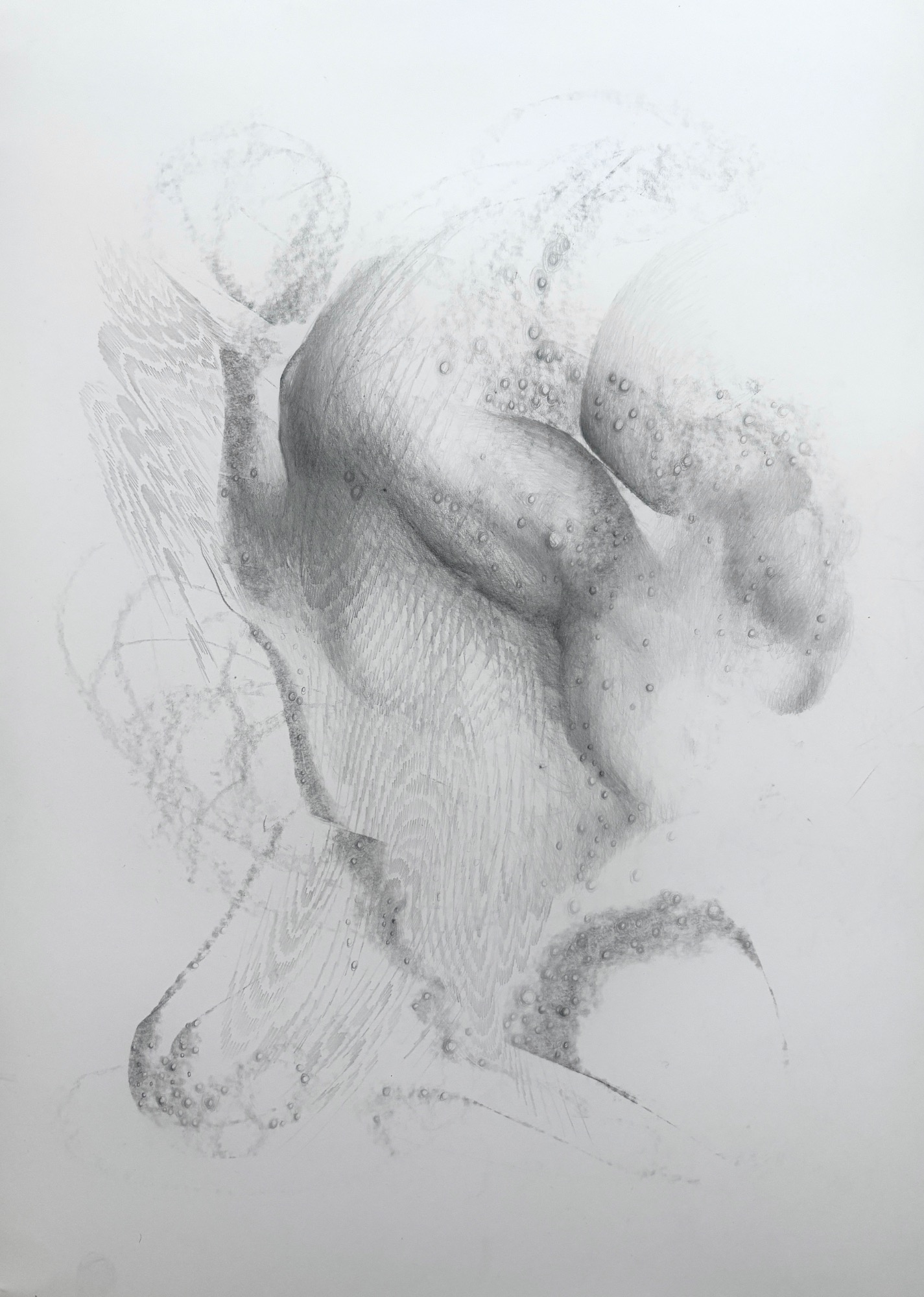
Patricia Detmering, February 2026
Such an opposition between the individual’s self-determination and the discourse of the Other or others also underlies Butler’s reading of “John,” who was subjected to a surgical error that removed a large part of his penis and who subsequently underwent multiple psychological and medical treatments concerning his gender identity. In “Doing Justice to Someone: Sex Reassignment and Allegories of Transsexuality,” Butler presents a series of excerpts from interviews with John related to these treatments. Butler understands these interviews not only as testimonies of gender construction but also traces two different aspects within them: on the one hand, we have a self-description, and that is to be honored. These are the words by which this individual gives himself to be understood. On the other hand, we have a description of a self that takes place in a language that is already going on, that is already saturated with norms, that predisposes us as we seek to speak of ourselves.[xiv]
This opposition corresponds to the opposition between self-determination (self-description) and the dominant, oppressive, and normative discourse. According to Butler, John thus makes a distinction between the “I” that he is, the person that he is, and the value that others assign to him regarding what is not between his legs.[xv] The Other puts words in his mouth and assigns a particular value to the words he utters, which does not correspond to the person he is.
Butler herself, however, also assigns such a value to his words when she states: “Something exceeds the norm, and he recognizes its unrecognizability.”[xvi] Butler appears as the one who knows what John recognizes beyond psychological or medical understanding. “He shows, we might say, that there is an understanding to be had that exceeds the norms of intelligibility itself.”[xvii] And “he renders himself unintelligible to those who seek to know and capture his identity.”[xviii] The Other (the doctor/psychologist) cannot understand him, but Butler grasps his unintelligibility. Butler knows better than the knowledgeable psychologists and doctors: “he is the human in its anonymity, as that which we do not yet know how to name.”[xix]
Setting aside Butler’s position as the one who knows in relation to John, the individual appears as One entirely alone (as John is supposed to be). Butler, Thorup, and the queer movement tend toward an idea of an individual who is not only One entirely alone but also, in principle, fully transparent to themselves. Although the individual is initially ideologically oppressed or subjected to given repressive and normative discourses, there is no longer any distance between language and non-language if and when the individual has freed themselves from these. The individual is also no longer determined by linguistic alienation.
There is, however, no pure identity, since every identity is based on an underlying exclusion (for example, of signifiers that do not match such an identity) or suppression—not necessarily of an external enemy or oppressive norms, as Butler suggests, but of an immanent surplus of other linguistic relations. Or to put it differently: every linguistically grounded identity presupposes a difference from other linguistic relations. Every linguistically grounded identity is built on a difference from other identities. No identities stand alone but are always defined by specific differential relations within language. Lacan has accordingly emphasized that a signifier is not identical with itself and cannot designate itself.[xx] It is always determined by its differential relation to other signifiers that exist by virtue of the Other. Any signifier’s or any statement’s self-identity is thus an impossibility.
Where identity for Butler is based on language, its violence, and its inherent trauma, as well as a particular autonomy, Lacan, by contrast, assumes that identity is based on the logic of language, which never secures a solid identity. Another difference from Butler and much queer theory is that psychoanalysis thinks in terms of the signifiers man and woman, but this does not mean that it does not acknowledge a subject’s desire to change gender, to replace the so-called biological sex they have, such as female or male sexual organs, vagina, penis, breasts, etc. Man and woman, as well as various gender conceptions, are moreover, according to Lacan’s ideas, denaturalized phenomena, since they are words in language. No matter how many designations exist for sexual organs, they say nothing about their so-called essence or nature outside language. The subject and designations of gender never coincide with biology but are always already at a distance from such biology. Paradoxically, this means that the subject becomes woman or man regardless of their biological sex, even though “woman” and “man” are signifiers that are not self-identical.
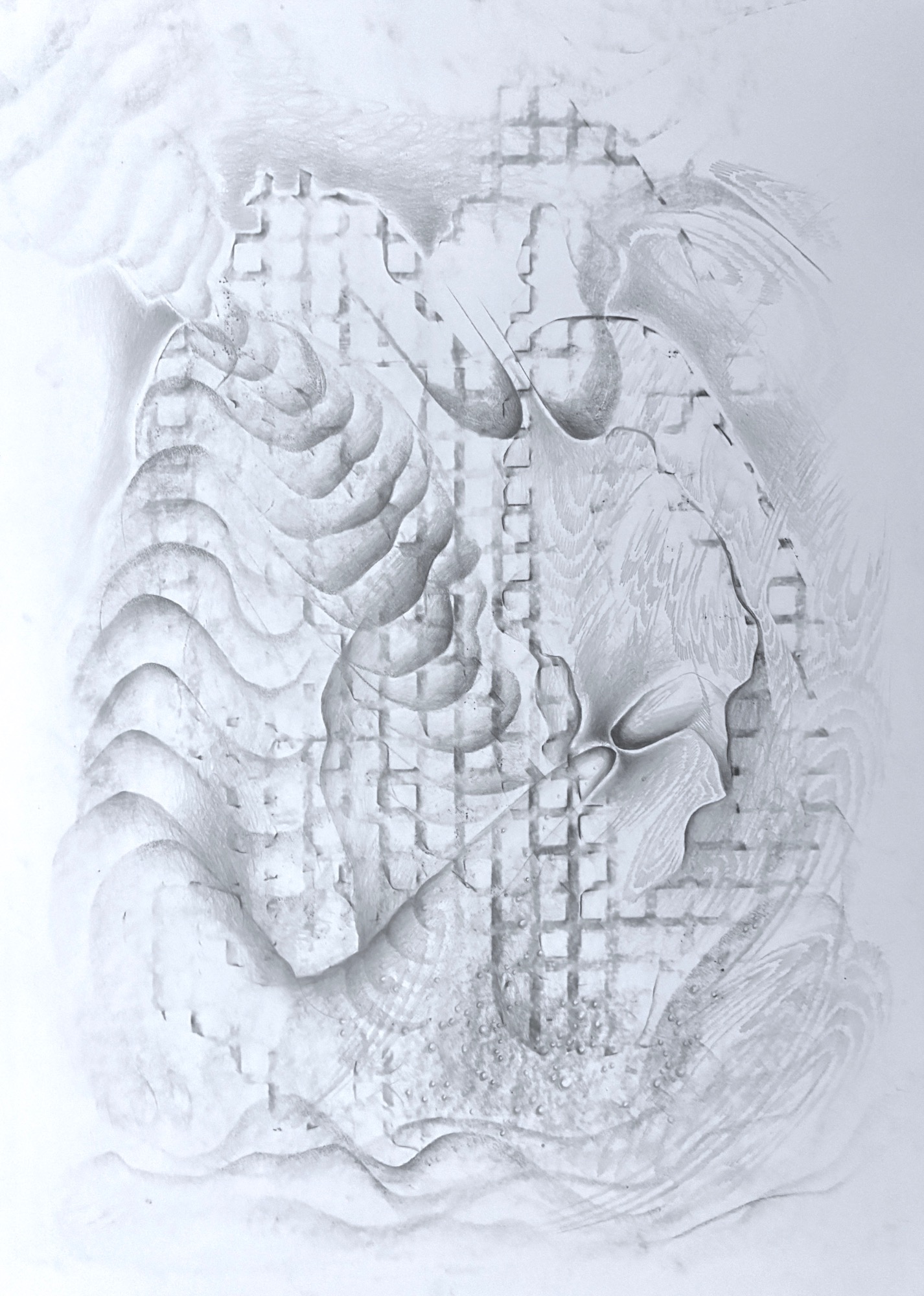
Patricia Detmering, February 2026
Here we see another difference from Butler, who assumes that language, its violence, and its fear-inducing speech acts cause gender – such as man/woman – to appear as natural categories. Language and its built-in violence, so to speak, make gender differences appear as natural and original categories, as naturalizations. This involves “a body that has already been constructed or naturalized as gender-specific.”[xxi] For Lacan, by contrast, the logic of language denaturalizes the body.
As noted, psychoanalysis operates with a linguistic division between man and woman, which has prompted criticism from the queer movement, which operates with a non-binary identity. Although this idea of psychoanalysis as binary is erroneous, the idea within the queer movement is that the non-binary stands in opposition to the binary. In doing so, however, another form of binarity is established: the non-binary versus the binary. The non-binary discourse does not escape the notion of binaries. We may also understand the non-binary as non-woman, non-man, or non-woman-or-man, whereby woman and man are maintained as binary opposites to the non-binary. There is no reason to belittle individuals who define themselves as non-binary, but this underscores that the signifier non-binary, like other signifiers that attempt to say something about gender or our body as such, is not an unambiguous or secure signifier. Paradoxically, the non-binary simultaneously nourishes the idea of the binary, since the non-binary is the condition of possibility for the binary.
The non-binary critique of psychoanalysis’s “binary” thinking is furthermore based on a mistaken interpretation of psychoanalysis’s conception of gender. Binary thinking normally assumes the existence of two units that are connected in a particular way. But the signifiers “woman” and “man” are not units in Lacan’s understanding. First, they are semblants, and second, they are determined by their differences from other signifiers. Woman is thus non-man, man is non-woman, without any positive relation between the two. It is the symbolic law that excludes an “original” enjoyment, including incest, thereby making orientation toward the other’s body possible. The law does not prohibit homosexuality or transsexuality, as Butler assumes, but excludes an “original” and supposedly unlimited enjoyment. It necessitates an orientation toward a lesser enjoyment, which signifiers such as man/woman and heterosexuality/homosexuality can open up.
[i] Brinkmann: Identity: Challenges in the Consumer Society, p. 13.
[ii] ibid., p. 22.
[iii] p. 25.
[iv] p. 67.
[v] Butler: “We Need to Rethink the Category of Woman.”
[vi] Butler: Undoing Gender, p. 39.
[vii] Butler: “A Livable Life? An Inhabitable World? Scheler on the Tragic,” p. 18.
[viii] Thorup: Kampen om identitetspolitik – en samtidsidéhistorie, pp. 145–46.
[ix] Thorup: Mange Mænd, p. 11.
[x] ibid., p. 27.
[xi] Lacan: Seminar XX: Encore, p. 32.
[xii] Thorup, ibid., p. 29.
[xiii] p. 39.
[xiv] Butler, ibid., p. 630.
[xv] ibid., p. 633.
[xvi] ibid.
[xvii] p. 634.
[xviii] ibid.
[xix] ibid., p. 635.
[xx] cf. Lacan: Seminar XIV: Logique du Fantasme, pp. 27 and 33.
[xxi] Butler: Gender Trouble: Feminism and the Subversion of Identity, p. 133.
Literature
Brinkmann, Svend. Identitet. Udfordringer i forbrugersamfundet. Aarhus: Klim, 2015.
Butler, Judith (1990). Kønsballade. Feminisme og subversionen af identitet. Copenhagen: Forlaget THP, 2000.
Butler: Gender Trouble: Feminism and the Subversion of Identity, p. 133.
Butler, Judith (2004). Undoing Gender. New York & London: Routledge, 2004.
Butler, Judith (2015). “Doing Justice to Someone: Sex Reassignment and Allegories of Transsexuality.”
https://history.msu.edu/iss355/files/2015/06/Butler-Doing-Justice.pdf. Accessed 24 November 2025.
Butler, Judith (2021). “We Need to Rethink the Category of Woman.”
https://www.theguardian.com/lifeandstyle/2021/sep/07/judith-butler-interview-gender. Accessed 23 October 2025.
Butler, Judith (2022). “A Livable Life? An Inhabitable World? Scheler on the Tragic.” Puncta 5, no. 2 (2022).
Lacan, Jacques (1966–67). Le séminaire, livre XIV: Logique du fantasme. Paris: Seuil, 2023.
Lacan, Jacques (1972–73). Séminaire XX: Encore. Paris: Seuil, 1975.
Thorup, Mikkel. Kampen om identitetspolitik – en samtidsidéhistorie. Aarhus: Klim, 2022.
Thorup, Mikkel. Mange mænd.
https://pure.au.dk/ws/files/379042187/Mange_m_nd_low.pdf. Accessed 23 April 2025.
René Rasmussen is a practicing psychoanalyst and Professor Emeritus, working primarily within the Freudian and Lacanian traditions. His research focuses on psychoanalytic theory, language, sexuality, anxiety, and the relationship between psychoanalysis, philosophy, and contemporary diagnostic culture. He has played a significant role in introducing and critically interpreting Jacques Lacan’s work in a Scandinavian context. His publications include Lacan, sprog og seksualitet (Lacan, Language and Sexuality) and Lacans fire grundbegreber (Lacan’s Four Fundamental Concepts) (2009), Psykoanalyse. Et videnskabsteoretisk perspektiv (Psychoanalysis: A Philosophy of Science Perspective) (2010), as well as several books on anxiety, psychiatry, and diagnosis. More recent works includeHad din næste som dig selv (Hate Your Neighbour as Yourself) (2024), Judith Butlers nye klæder – Butler og psykoanalysen (Freud og Lacan) (Judith Butler’s New Clothes: Butler and Psychoanalysis [Freud and Lacan]) (2024), and Angst – en læsning af Jacques Lacan: L’Angoisse (Anxiety: A Reading of Jacques Lacan’s L’Angoisse) (2025). In addition to his academic work, he is also a poet and literary translator.
Patricia Detmering is a media artist from Berlin. She has given lectures in renowned galleries, foundations, and universities, such as the University of Bochum and the Krupp Foundation in Essen. Her work has received multiple awards and has been exhibited at the Centre Pompidou in Paris, the Berliner Festspiele, the Kunstmuseum Bochum and other international venues. In addition, she has received numerous scholarships. For more visit www.patriciadetmering.com.